


Heat shrink tubing is widely used in electrical and industrial applications to protect wires, connections, and sensitive components. Although different types of tubing may look similar after installation, their material composition, manufacturing structure, shrinkage behavior, and application requirements can vary considerably. Choosing the right type is important because the tubing needs to fit the component properly while providing suitable insulation and mechanical protection throughout its service life.
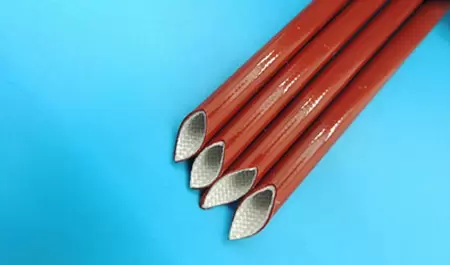
PET heat shrink tubing is one option for applications involving electrical insulation and component protection. Unlike many conventional heat shrink products made through extrusion or other forming processes, this type of tubing is manufactured from twisted polyester film bonded with a special adhesive. This construction gives it distinct structural characteristics and makes it suitable for applications such as wire harnesses, transformers, motors, cables, capacitors, and electrical appliances.
Understanding the differences between PET Heat Shrink Tubing and traditional heat shrink tubes helps engineers and purchasing teams evaluate which product better matches their equipment design and operating conditions.
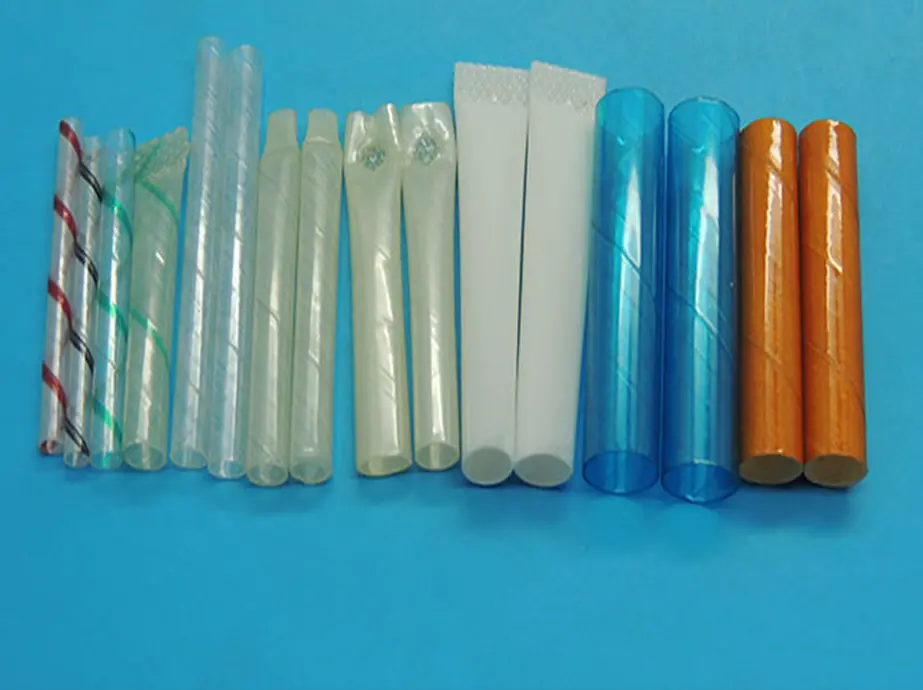
The first difference to consider is how the tubing is constructed.
Traditional heat shrink tubing is a broad product category. Depending on the manufacturer and application, it may be produced from materials such as polyolefin, PVC, fluoropolymers, or other polymers. Many conventional products are manufactured through extrusion, followed by a process that gives the tubing its heat-shrinkable properties. Their performance depends heavily on the base material, wall thickness, formulation, and manufacturing process.
PET Heat Shrink Tubing, including Sunbow's SB-PET-HST model, uses a different construction. It is manufactured by twisting polyester film and bonding the film with a special adhesive. According to the product specifications, the adhesive possesses chemical characteristics similar to those of polyester film.
This film-based construction is an important distinction when evaluating the product. Rather than assuming that all heat shrink tubes share the same structure, buyers should consider the actual material layers and bonding method. These factors can influence the tubing's physical characteristics, installation requirements, and suitability for specific electrical components.
When comparing products, it is therefore useful to ask suppliers for information about the base material, construction method, adhesive characteristics, and available dimensional specifications.
Shrinkage performance is another important consideration. Heat shrink tubing is generally selected to fit around a component after exposure to an appropriate heating process. However, different products may have significantly different shrinkage ratios.
The SB-PET-HST product specifications identify three polyester styles with different shrinkage characteristics:
| Polyester style | Diameter shrinkage | Length shrinkage |
|---|---|---|
| Heat Shrink Polyester | 32% | 35% |
| Slow Shrink Polyester | 8–12% | 8–12% |
| Not Flammable Polyester | ≤2% | ≤2% |
These figures show that the available polyester structures do not behave identically during heating. The Heat Shrink Polyester option has higher stated dimensional shrinkage, while Slow Shrink Polyester has more limited shrinkage. The Not Flammable Polyester option has a stated shrinkage of no more than 2% in both diameter and length.
This distinction matters during product selection. If a sleeve is expected to contract around a wire bundle or connection, the available shrinkage needs to match the dimensions and installation requirements. If dimensional stability is more important, a lower-shrinkage structure may be worth evaluating.
Traditional heat shrink tubing also comes in different shrink ratios, depending on its material and design. Common products may have different recovery characteristics, so a buyer should never assume that all tubing contracts by the same amount.
For reliable selection, compare the stated diameter and length shrinkage separately. Also confirm the testing method and actual finished dimensions with the manufacturer before placing a production order.
Temperature requirements can determine whether a particular insulation sleeve is suitable for an electrical assembly.
Traditional heat shrink tubes cover a wide range of operating temperatures. Polyolefin products, PVC products, and fluoropolymer products, for example, have different thermal characteristics. The correct choice depends on the material grade and the temperature conditions expected during operation.
For SB-PET-HST, the specified working temperature is -60ºC to +150ºC, while the listed service temperature is -70ºC to +150ºC. The product also has a stated melting point of 250ºC to 265ºC.
These values describe different aspects of thermal performance and should not be treated as interchangeable. The melting point does not mean that the tubing can operate continuously at that temperature. For equipment design, the specified working and service temperature ranges are more relevant starting points.
The product's temperature-related electrical specifications also provide useful information:
Dielectric strength at 25ºC: 2650 V/MIL, 60 cycles.
Dielectric strength at 150ºC: 2125 V/MIL, 60 cycles.
The figures indicate that the stated dielectric strength differs between the two test temperatures. Engineers should consider this variation when evaluating insulation requirements in equipment exposed to elevated temperatures.
For applications involving motors, transformers, heating elements, and electrical appliances, it is important to assess the actual temperature around the protected component rather than relying only on the equipment's general operating temperature.
Both PET heat shrink tubing and traditional heat shrink tubes can be used to protect electrical components, but their suitability depends on their tested properties and intended applications.
Traditional products may provide electrical insulation, environmental protection, abrasion resistance, or chemical resistance, depending on the material and product design. Not every traditional heat shrink tube provides the same combination of characteristics.
SB-PET-HST is intended for insulation and mechanical protection in areas such as soldered joints, electrical connections, wire harnesses, transformers, motors, cables, heating elements, capacitors, telephones, and household electrical appliances.
Its product specifications include a stated cuticle intensity of at least 400 g/cm² and resistance characteristics covering abrasion, acids, immersion, mildew, industrial solvents, mechanical damage, Freon, and special liquids.
The manufacturer also specifies negligible corrosive effects on copper and indicates that the material remains undissolved in acids, oils, paints, and industrial solvents under the stated product characteristics. These details can be relevant when the tubing is used around metal conductors or in equipment where contact with different substances is possible.
However, chemical resistance should always be evaluated against the actual substance, concentration, temperature, and exposure duration. A general resistance statement does not replace application-specific compatibility testing.
For electrical assemblies, buyers should also confirm that the selected tubing meets the required insulation and voltage specifications. The product lists a 50 Hz resistance-pressure test of 2500 V/min without perforation. The test conditions and reporting method should be confirmed with the manufacturer when formal electrical qualification is required.
Physical dimensions are often more important than expected when selecting heat shrink tubing. A product may have suitable electrical properties but still be unsuitable if its internal diameter, wall thickness, or length does not match the component.
SB-PET-HST is available with the following dimensional range:
| Parameter | Available specification |
|---|---|
| Inside diameter | 2.0–65 mm |
| Wall thickness | 0.05–2 mm |
| Length | 10–1800 mm |
| Available colors and appearances | Clarity, Light Yellow, Haze, Stripe |
These options allow the product to be considered for different wire sizes, electrical connections, and equipment layouts. The manufacturer also states that other dimensions can be produced upon request.
Traditional heat shrink tubes are available in many sizes and colors as well, but their dimensional ranges vary by material and supplier. Buyers should compare the actual available sizes rather than relying on general industry assumptions.
When requesting a quotation or sample, it is helpful to provide the component's outside diameter, the required tubing length, the available installation space, the preferred wall thickness, and the expected shrinkage behavior. If the tubing will cover a connection or irregularly shaped component, a sample installation can help verify fit before mass production.
The choice between PET heat shrink tubing and traditional heat shrink tubes should be based on the application rather than the product name alone.
Traditional heat shrink tubing is used across many industries, including automotive wiring, electronics, telecommunications, household appliances, and industrial electrical systems. Different material types serve different requirements, such as flexibility, chemical exposure, environmental sealing, or temperature resistance.
PET-based tubing is particularly relevant to applications where its polyester film construction and specified electrical and mechanical properties match the design requirements.
Typical application areas for SB-PET-HST include:
Wire harnesses and electrical connections: Providing insulation and mechanical protection around wiring and connection areas.
Motors and transformers: Protecting selected leads and electrical connection components.
Cables and capacitors: Supporting insulation and physical protection in electrical assemblies.
Heating elements: Covering suitable connection areas where the specified temperature range is appropriate.
Electrical appliances and electronic equipment: Protecting internal wiring and selected components during assembly and operation.
These applications are also relevant to manufacturers of automotive electrical systems, home appliances, power equipment, and industrial machinery. The final selection should still be based on the actual component design, applicable standards, and operating environment.
There is no single type of heat shrink tubing that is suitable for every application. A practical comparison should begin with the requirements of the component being protected.
Before choosing a product, consider the following points:
Material and construction: Determine whether a polyester film-based structure or another polymer material better matches the application.
Temperature range: Check the minimum and maximum operating temperatures, including possible temperature fluctuations during operation.
Shrinkage ratio: Confirm whether the tubing needs to contract substantially or maintain relatively stable dimensions.
Electrical requirements: Review dielectric strength, voltage conditions, and the insulation requirements of the assembly.
Mechanical protection: Consider exposure to abrasion, movement, vibration, and potential contact with other components.
Dimensions: Match the inside diameter, wall thickness, and length to the component and installation space.
Chemical exposure: Verify compatibility with oils, solvents, acids, and other substances that may be present.
It is also useful to request samples when comparing products with different structures. A sample can help verify installation behavior, dimensional fit, and compatibility with the actual assembly process.
For manufacturers looking for polyester-based insulation sleeves, Shenzhen Sunbow Insulation Materials MFG. Co., Ltd. provides a range of insulation products, including SB-PET-HST.
Established in 2003, Sunbow focuses on the research, development, manufacturing, and sales of insulation sleeves. The company has more than 60 patents and has received several technology-related recognitions, including Shenzhen High-tech Enterprise and National High-tech Enterprise status. It also received recognition as a specialized and innovative small and medium-sized enterprise in Shenzhen in 2022.
Sunbow operates facilities in Gongming, Shenzhen, and Qiaotou, Dongguan. Its two factories cover nearly 20,000 square meters and have a combined monthly output of more than 40 million meters of various types of sleeves. The company has also upgraded and passed ISO 9001:2015 and IATF 16949:2016 management system certifications.
Its product portfolio includes fiberglass sleeving, heat shrinkable tubes, PVC tubes, silicone rubber tubes, PTFE tubes, expandable sleeves, corrugated pipes, and polyimide film tubes. The company serves a wide range of industries, including motors, home appliances, automotive electrical systems, power distribution, new energy vehicles, energy storage, and electronic equipment.
Sunbow's products are used by customers across international markets and have supported applications associated with well-known companies in the electrical, appliance, automotive, and industrial sectors. Its automotive-related products are also indexed in the International Material Data System (IMDS).
For buyers comparing polyester tubing with conventional heat shrink products, Sunbow can provide product information and discuss available dimensions and customization requirements. The PET Heat Shrink Tubing SB-PET-HST is worth evaluating when the application calls for a polyester film-based sleeve with defined thermal, electrical, and mechanical characteristics.
PET heat shrink tubing and traditional heat shrink tubes should not be treated as interchangeable products. Their material composition, manufacturing structure, shrinkage behavior, temperature limits, and application suitability can differ significantly.
Traditional heat shrink tubing offers a broad range of material choices for different industrial requirements. PET-based tubing provides another option, particularly for electrical insulation and mechanical protection applications where its polyester film construction and specified properties are appropriate.
By comparing the material structure, shrinkage ratio, temperature range, dielectric performance, dimensions, and actual operating conditions, buyers can make a more informed selection. For applications involving wire harnesses, motors, transformers, cables, and electrical appliances, PET Heat Shrink Tubing SB-PET-HST from Shenzhen Sunbow Insulation Materials MFG. Co., Ltd. can be considered as part of the insulation material selection process.




 EN
 VI
 IT
 ES
 TH
 TR
 JA
 PT
 RU
 FR
 DE
 AR
 ID
 EN
 中