


Selecting a corrugated pipe for cable protection involves more than finding a suitable diameter. The material must also match the operating temperature, installation environment, and mechanical demands of the equipment. A pipe used around motor wiring may face different conditions from one installed in food processing machinery or electrical control equipment. Choosing an unsuitable material can affect the service life of the cable protection system and create avoidable maintenance work.
The Seal Type Corrugated Pipe SB-STCPis available in PE, PP, and PA materials, each with a specified working temperature range. Understanding these differences helps equipment manufacturers and purchasing teams identify a suitable option for their applications. In addition to temperature, flexibility, abrasion resistance, chemical exposure, and installation dimensions should all be considered before confirming a specification.
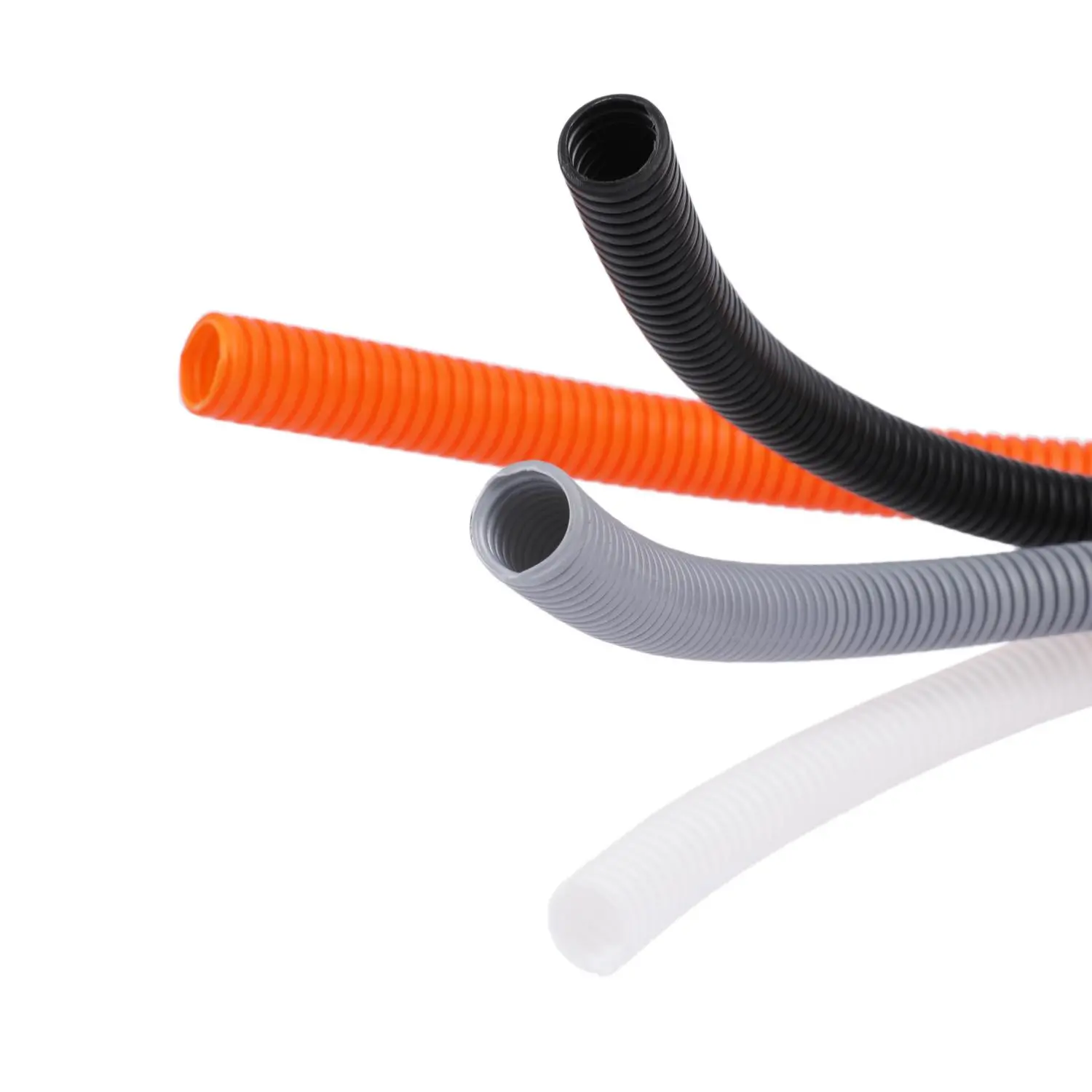
PE, PP, and PA are three different material options used in corrugated cable protection pipes. Their working temperature ranges provide an initial reference for selection.
| Material | Working Temperature |
|---|---|
| PE | -30°C to +100°C |
| PP | -40°C to +110°C |
| PA | -40°C to +125°C |
The listed ranges show that PA has the highest upper working temperature among the three options, while PE has the lowest specified lower and upper limits. PP provides an intermediate temperature range. These differences are useful when narrowing down material choices, but temperature should not be the only selection criterion.
Actual equipment conditions may involve temperature fluctuations, nearby heat sources, ventilation limitations, and periods of continuous operation. Buyers should therefore consider the expected temperature around the installed pipe rather than relying solely on the general operating temperature of the machine.
PE is specified for a working temperature range of -30°C to +100°C. It can be considered for cable protection applications where the expected operating conditions remain within this range and do not require the higher temperature limits offered by PP or PA.
When evaluating PE corrugated pipes, equipment manufacturers should consider the installation environment, the possibility of contact with moving components, and the amount of bending required during assembly. The pipe's flexibility and dimensions should be checked against the intended cable routing path.
PE may be a practical option when the application's temperature requirements are compatible with its specified range. However, buyers should also review other environmental factors, including exposure to chemicals, friction, and repeated movement. The final material choice should be based on the complete application rather than temperature alone.
PP corrugated pipes have a specified working temperature range of -40°C to +110°C. Compared with the listed PE range, PP supports a lower minimum temperature and a higher maximum temperature.
This range may make PP worth evaluating for equipment that operates under wider temperature conditions. Applications can include electrical equipment, machinery, automatic meters and gauges, and motor cable installations, depending on the actual operating environment and product requirements.
When considering PP, buyers should check whether the pipe will be installed near heat-generating components or exposed to temperature changes during equipment operation. They should also confirm the required inner diameter, outer diameter, and installation flexibility.
The Seal Type Corrugated Pipe range offers PP as one of three material options, allowing purchasing teams to compare the available temperature specifications without changing the basic product category. Final compatibility should still be confirmed for the intended equipment and installation conditions.
PA has the highest specified working temperature range in this product series, from -40°C to +125°C. For applications where the expected operating temperature is above the specified upper limit of PE or PP, PA is an option to evaluate.
This can be relevant in machinery and electrical equipment where cables are routed near components that generate heat. Motor assemblies and other equipment with concentrated heat sources may require particular attention to the temperature around the cable protection pipe.
Choosing PA does not remove the need for an installation assessment. Buyers should consider whether the pipe will experience continuous heat, short-term temperature peaks, abrasion, bending, or contact with other materials. They should also confirm that the cable insulation and other connected components are suitable for the same operating conditions.
The highest temperature rating alone does not determine the best material. A complete review of operating conditions, installation requirements, and component compatibility is necessary before finalizing the specification.
Temperature is an important starting point, but industrial cable protection also depends on mechanical and environmental conditions. The product is described as having good flexibility, abrasion resistance, acid resistance, and fire resistance. These characteristics are relevant when assessing the demands placed on cable protection systems.
Flexibility matters when cables need to pass through curved routes or fit into equipment with limited installation space. A suitable corrugated pipe can help organize the cable route while providing an additional protective layer. The required bending conditions should be checked against the actual installation layout.
Abrasion resistance is relevant when pipes are installed near equipment structures, moving parts, or surfaces that may come into contact with the pipe during operation. The frequency and intensity of contact should be considered when selecting a material and planning the cable route.
For environments where acids or other chemicals may be present, buyers should identify the specific substances and exposure conditions. General acid resistance does not mean that every material is compatible with every chemical. Compatibility should be confirmed for the actual substance, concentration, temperature, and exposure duration.
Fire resistance is another stated product performance characteristic. Where a project requires a particular flame-retardant classification or test standard, purchasing teams should request the corresponding technical documentation rather than assuming that a general performance description meets the project's requirements.
The SB-STCP features a wavy shape on both the interior and exterior surfaces. This corrugated structure is an important part of the product design and should be considered when planning cable routing.
The corrugated profile allows the pipe to accommodate curved installation paths more readily than a rigid, straight tube. This can be useful in machinery, electrical equipment, and automatic instruments where cables need to follow the layout of internal components.
The inner and outer surfaces should both be considered during installation planning. The inner diameter determines the available space for the cable bundle, while the outer diameter affects clearance through brackets, openings, and equipment housings.
For the Seal Type Corrugated Pipe SB-STCP, available sizes range from AD7.0 to AD54.5. The following table provides the listed dimensions and roll packing information.
| Item No. | Inner Diameter (mm) | Outer Diameter (mm) | Packing (m/roll) |
|---|---|---|---|
| AD7.0 | 5.0 | 7.0 | 500 |
| AD7.5 | 5.5 | 7.5 | 500 |
| AD9.0 | 6.0 | 9.0 | 500 |
| AD10.0 | 7.0 | 10.0 | 500 |
| AD11.0 | 8.0 | 11.0 | 500 |
| AD12.0 | 9.0 | 12.0 | 500 |
| AD13.0 | 10.0 | 13.0 | 500 |
| AD14.0 | 11.0 | 14.0 | 200 |
| AD15.8 | 12.0 | 15.8 | 200 |
| AD18.5 | 14.3 | 18.5 | 200 |
| AD19.0 | 15.0 | 19.0 | 200 |
| AD21.2 | 17.0 | 21.2 | 200 |
| AD22.0 | 18.0 | 22.0 | 100 |
| AD23.0 | 19.0 | 23.0 | 100 |
| AD25.0 | 20.0 | 25.0 | 100 |
| AD27.0 | 22.0 | 27.0 | 100 |
| AD28.5 | 23.0 | 28.5 | 100 |
| AD30.0 | 25.0 | 30.0 | 100 |
| AD32.0 | 27.0 | 32.0 | 100 |
| AD34.5 | 29.0 | 34.5 | 100 |
| AD42.5 | 36.0 | 42.5 | 50 |
| AD54.5 | 48.0 | 54.5 | 25 |
When selecting a size, the cable bundle should not be treated as an exact match for the pipe's inner diameter. Sufficient clearance is needed to make installation manageable and avoid excessive compression or difficulty feeding cables through the pipe. The final size should also account for connectors, bends, and the available space inside the equipment.
The product can be used in machinery, electrical equipment, foodstuff machinery, automatic meters and gauges, and motors as abrasion and insulation protection for cables. Each application should be assessed according to its own operating conditions.
In machinery, cable routes may pass close to structural components or moving mechanisms. Flexibility, abrasion resistance, and suitable dimensions are therefore important considerations.
In electrical equipment and control systems, buyers should review the installation temperature, cable arrangement, and available space within enclosures. For motors, the location of heat-generating components and the expected temperature around the cable route deserve particular attention.
Foodstuff machinery may involve specific cleaning procedures and exposure to cleaning agents. In these environments, the compatibility of the selected pipe material with the actual cleaning chemicals and operating conditions should be verified before use.
For automatic meters and gauges, compact dimensions and orderly cable routing can help simplify equipment assembly. The appropriate AD size should be selected according to the number and dimensions of the cables being protected.
Material selection is only one part of a reliable cable protection solution. Consistent manufacturing, product specifications, and technical communication are also important, particularly for equipment manufacturers managing repeat orders or multiple product configurations.
Shenzhen Sunbow Insulation Materials MFG. Co., Ltd. was established in 2003 and focuses on the research and development, manufacturing, and sales of insulation sleeves and related products. Its portfolio includes fiberglass sleeving, heat shrinkable tubes, PVC tubes, silicone rubber tubes, PTFE tubes, expandable sleeves, corrugated pipes, and polyimide film tubes.
With more than 20 years of manufacturing experience, Sunbow Insulation Materials has developed a production and testing system supported by an R&D team and dedicated manufacturing equipment. The company reports more than 60 patents, a factory area of approximately 20,000 square meters, and monthly output of over 40 million meters of various sleeves.
Its quality management certifications include ISO 9001:2015 and IATF 16949:2016. The company also reports UL and CSA certifications for specified fiberglass sleeving products, as well as UL certifications for certain heat shrinkable, PTFE, silicone rubber, PVC, and expandable sleeve products. These certifications apply to the stated product categories and should not be assumed to cover every corrugated pipe model.
For buyers evaluating the SB-STCP series, confirming the required material, working temperature, dimensions, and relevant technical documentation with the manufacturer can help ensure that the selected specification matches the intended application.
Choosing between PE, PP, and PA starts with the actual temperature conditions around the cable route. PE covers a specified range of -30°C to +100°C, PP covers -40°C to +110°C, and PA covers -40°C to +125°C. These ranges provide a clear basis for initial comparison.
The next step is to assess flexibility, abrasion exposure, chemical contact, installation space, and cable bundle dimensions. Buyers should also verify any project-specific fire performance or compliance requirements through relevant documentation.
The Seal Type Corrugated Pipe SB-STCP provides three material options and a range of sizes from AD7.0 to AD54.5 for different cable protection requirements. By matching the material and dimensions to the real operating environment, equipment manufacturers can make a more informed selection and plan cable routing with greater confidence.
With its established insulation materials manufacturing experience and broad product portfolio, Sunbow Insulation Materials supports customers looking for cable protection and insulation solutions across industrial applications. A clear review of material conditions and installation requirements remains the most practical starting point for selecting the right corrugated pipe.




 EN
 VI
 IT
 ES
 TH
 TR
 JA
 PT
 RU
 FR
 DE
 AR
 ID
 EN
 中